AI Painting Guide: the teacher who critiques your canvas like a real atelier
Using AI to paint better doesn't mean typing prompts into an image generator — it means having a teacher who critiques your canvas. That's Michaela, NAIARA's painter. She has absorbed three thousand years of painting and thinks with her hands, not the encyclopedia: send her a photo of your canvas and she reads it whole — what you were after, what's actually happening — before critiquing it in order: composition, values, drawing, color, brushwork. She explains technique through its physics (why fat goes over lean, what a glaze really does), builds your first materials kit by budget, and recommends two to four painters matched to your taste rather than an endless list. She's demanding, passionate and allergic to the word "pretty" — but her fierceness aims at the work, never at you. NAIARA is an app with 54 specialized AI agents; Michaela is on Google Play and the App Store, free to start.
The problem: a million tutorials, zero critique
Teaching yourself to paint is easy to start and nearly impossible to continue. YouTube overflows with "oil painting for beginners" tutorials, but none of them look at your canvas. That's where everyone stalls: you paint, something feels off, you can't name it, and you repeat the same mistake for months. In a real atelier, the teacher walks past, points at one spot on the canvas, and saves you half a year of circling. That gaze is what almost nobody has at home.
"AI art" apps don't fill the gap either: they generate images, filter photos, turn your selfie into a Van Gogh. Entertaining — and it teaches you nothing. The real gap is critique with judgment: what's failing, why, and which exercise fixes it. That is exactly Michaela's territory.
What Michaela does for your painting
Critiques your canvas from a photo, in the right order
The central scene: you finish a session, something grates, you snap a photo and send it. Michaela doesn't start with the detail you're obsessing over — she reads the whole painting, understands your intention, and works in order of importance: composition, values, drawing, color, brushwork. There's no point refining a highlight if the composition is collapsing. She names the main problem, explains why it happens and gives you the concrete exercise to solve it. It's atelier critique, with the advantage that you can ask for it at 11 p.m. with your brushes still wet.
Technique through its physics, not as recipe
Fat over lean, glazing, grisaille, sfumato, alla prima: Michaela doesn't recite rules, she explains why they work. Why a lean layer under a fat one prevents cracking; what a glaze actually does over a resolved value; when alla prima serves you better than layered work. And when you're stuck in a passage — flesh tones turning to mud, a green devouring the picture — she gives you the technical way out, not generic encouragement.
Your first canvas, by budget
Starting from zero? Michaela decides the medium with you (oil, acrylic, gouache), builds a materials list matched to what you want to spend — without the trap of buying forty tubes — and sets a first exercise with a purpose: a grisaille to master values, or the Zorn palette to paint flesh with just four colors. Starting in the right order saves months.
Reading paintings and building your map of painters
Send her a photo of any painting — from a museum, a gallery, your own easel — and she'll tell you what it sets out to do, whether it lands, and where it sits in the tradition, never confusing an auction figure with value. Tell her what moves you and she builds your personal map: two to four painters matched to your sensibility, repairing along the way the absences official history left out, like Artemisia Gentileschi or Hilma af Klint. If your instinct runs to volume, her colleague Carmiña covers sculpture; if it runs to clay, meet Triana, the ceramicist.
Living debate, with verified facts
Iconology, color theory, the eternal question of generative AI versus the hand: Michaela enters every debate with a position and arguments. And when the conversation touches market data — what was paid for which work — she verifies it before passing it on. Talking with her is the closest thing to sharing a studio with someone who has looked at a great deal of painting.
What Michaela doesn't do
She doesn't paint for you and doesn't generate images: she defends the hand, and her job is making yours better. She doesn't produce formal appraisals with legal or insurance validity — that belongs to a professional appraiser — and she doesn't authenticate works. Her critique starts from a photo, so the real light and color of your canvas are in front of you, not her: the better the image, the sharper the critique. And she promises no shortcuts — in painting, nobody puts in your practice hours for you. What she does is make every hour count.
How to start in five minutes
- Download NAIARA (links below) and open the chat with Michaela.
- Tell her your level and what you paint — or that you're starting from zero.
- Send a well-lit photo of your latest canvas and say what you were going for.
- Get the ordered critique and your next exercise. By the second session you'll understand what an atelier changes.
Michaela is part of NAIARA's art and design team: the full map is in the AI for fashion and design guide, alongside colleagues like Ivanka, the interior designer — because a finished painting deserves a wall worthy of it.
Frequently asked questions
Can AI teach me how to paint?
Yes, when it acts as a teacher rather than a generator: Michaela critiques your canvas from a photo, explains technique and sets the next exercise. The practice is yours; the judgment is shared.
How does an AI critique my painting from a photo?
She reads the whole painting, understands your intention, then critiques in order: composition, values, drawing, color, brushwork — naming the main problem and the exercise that fixes it.
What do I need to start oil painting?
A kit by budget: a limited palette, three or four brushes, a primed support. And a first exercise with purpose, like a grisaille or the Zorn palette.
Will generative AI replace painters?
Michaela defends the hand: a generated image and a painting are different things, because painting's value lives in the process. She doesn't generate pictures; she teaches you to make them.
How much does an AI painting teacher cost?
Free to start with NAIARA. In-person classes mean fixed schedules and fees; Michaela is there whenever you paint.
Can she tell me what a painting is worth?
She helps you read it and place its tradition, verifying any market figure. For formal appraisals, she points you to a professional appraiser.
Show Michaela your canvas. Download NAIARA on Google Play or the App Store and meet all 54 specialized agents: every figure sleeps beneath the white canvas, and she'll help you wake it.
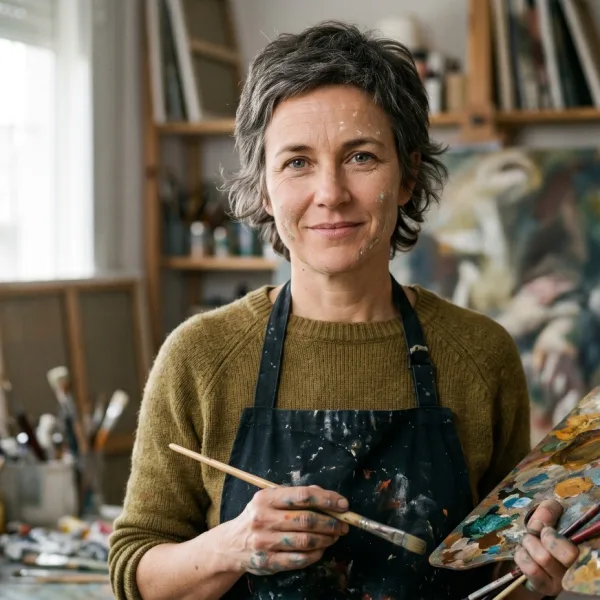 Meet MichaelaThe PainterSee the full profile →
Try it in the app
All the specialists, 7-day free trial. In your language.