AI Nutritionist: What It Gets Right, Where It Fails, and When to See a Dietitian
Can an AI plan your diet? Yes — but not any diet, and not for everyone, and that deserves to be said upfront. The available evidence is lukewarm: a study comparing ChatGPT's meal plans with those of human dietitians found an agreement score of just 0.42 out of 1. AI nails the principles (more plants, fewer ultra-processed foods, Mediterranean-style patterns) and stumbles on the fine detail — calories, macros, and above all the clinical context of the person in front of it. That's why a well-designed AI nutritionist is a complement to a registered dietitian, never a replacement. Amaia, NAIARA's nutrition expert, starts from exactly that premise: she plans your week of meals, writes your shopping list, analyses a photo of your plate and teaches you to read labels — but she doesn't do extreme diets and doesn't touch medical conditions. If your case belongs to a doctor or a dietitian, she says so and helps you prepare the appointment. That honesty is the difference between helping you and selling you hype.
The real problem: endless noise, very little judgement
There has never been more nutrition information — or more confusion. Every week brings a new viral diet, a "miracle" ingredient and a video demonising whatever was healthy yesterday. Meanwhile, the real questions go unanswered: what's for dinner with what's in the fridge, how to organise the week so it doesn't end in takeaway, which yoghurt to pick from twenty near-identical labels. A registered dietitian solves all of that, but private appointments aren't cheap and you don't need one for every everyday doubt. That's where an AI nutritionist earns its place: in daily life, in the supermarket, in the kitchen. Not in your blood work or your thyroid.
What an AI nutritionist does well (and Amaia specifically)
Where AI genuinely delivers is organisation, education and consistency:
- Your week, planned. Seven days of breakfast, lunch and dinner for your goal and pace, with no repeated dish.
- The shopping, done. A list organised by supermarket aisle, with clear criteria to choose well — no brand pushing.
- What's for dinner? Quick recipes with what's already in your fridge, made for enjoyment, not for counting numbers.
- You learn to eat. She turns studies into plain talk, teaches you to read labels and separates packaging spin from real data.
- World kitchens. Mediterranean, washoku, Okinawa or Blue Zones: ways of eating that science backs and time has polished.
Amaia is also multimodal: snap a photo of your plate or a product label and she'll tell you what she sees, what's fine and what she'd change. It's the classic scene: you're in the supermarket torn between two packets — photo, answer, decision.
Where AI fails (and why the sceptics have a point)
The media asking "can you really trust AI with your diet?" aren't exaggerating. Language models fail in specific, documented ways: calorie maths that drifts, unrealistic portions, menus that ignore medication interactions, and a tendency to sound equally confident whether right or wrong. The 0.42 agreement study sums it up: the general direction is sound, the clinical detail is not reliable. Then there's the more serious risk: a generic AI can play along with someone showing signs of an eating disorder, or propose aggressive deficits without knowing any history. That's why Amaia has hard lines: zero extreme diets, zero promised results, and an explicit referral the moment a topic stops being hers.
When you need a registered dietitian
Some signals clearly mean your case needs a health professional, not an app:
- A diagnosed or suspected condition: diabetes, kidney disease, coeliac disease, thyroid issues, treated high cholesterol.
- Pregnancy, breastfeeding or children's nutrition with specific goals.
- Any history or sign of disordered eating: if food brings anxiety, guilt or compensating behaviours, the path is a psychologist and a dietitian — not a diet.
- Rapid, unexplained weight change: a doctor should look at that first.
- Medication with food interactions (anticoagulants, lithium, MAOIs...).
In all of those cases Amaia doesn't improvise: she tells you it's time for an appointment and helps you prepare it, with your questions noted and your week of meals on record so the professional has context.
Getting started with Amaia
Download NAIARA, open Amaia's chat and tell her three things: your goal (eat better, fix your schedule, stop improvising dinners), your pace of life and what's usually in your fridge. She'll build your first week and the shopping list from that. Then use her the way you'd use that big sister who actually studied nutrition: photo of the plate, doubt in the supermarket, "what's for dinner?". If you also want to work on rest or supplements, she has colleagues in NAIARA: Morfeo for better sleep, Néstor for supplements and Gaia for herbal medicine. All of them follow the same house rule we explain in our guide to AI for health and wellness: a complement to health professionals, never a substitute.
Frequently asked questions
Is AI reliable for making a diet?
Partly. A 2023 study measured agreement between ChatGPT's menus and those written by human dietitians and found a score of just 0.42 out of 1. AI gets the broad strokes right (more vegetables, fewer ultra-processed foods) but misses on fine-tuning calories and macronutrients. It's useful for organising everyday eating; it is not a substitute for clinical advice from a registered dietitian.
Can AI replace a registered dietitian?
No. A registered dietitian reviews your medical history, blood work, medication and progress, and is professionally accountable for their advice. AI is a complement: it helps you plan meals, understand labels and keep habits going between appointments, but it does not diagnose or treat conditions.
Are AI-generated diets safe?
For a healthy adult who wants to eat better, a sensible Mediterranean-style plan generated by AI is reasonably safe. It stops being safe when there's a medical condition (diabetes, kidney disease, an eating disorder, pregnancy) or when the AI suggests aggressive restriction. Amaia never does extreme diets and refers you to a doctor or dietitian when your case calls for one.
How is Amaia different from a calorie counter?
A calorie counter gives you numbers; Amaia gives you judgement. She plans your full week, builds a shopping list organised by supermarket aisle, teaches you to read labels and suggests recipes with what's already in your fridge — without obsessing over counting. Send her a photo of your plate and she'll tell you what she'd improve.
Is there a free AI nutritionist?
Yes. NAIARA is free to download on Google Play and the App Store, and you can talk to Amaia from the first minute. She's one of 54 specialists in the app, alongside agents for sleep, supplements and skincare.
Start today with Amaia
Eating better isn't about willpower — it's about having someone with judgement at hand when you decide. Download NAIARA on Google Play or the App Store and ask Amaia what's for dinner tonight. And if you want to meet the other 53 specialists, they're all on the agents page.
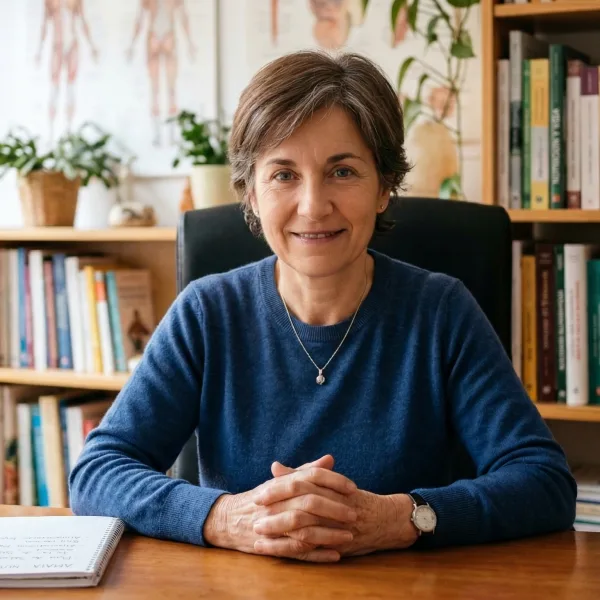 Meet AmaiaThe Nutrition ExpertSee the full profile →
Try it in the app
All the specialists, 7-day free trial. In your language.